Governance Challenges Surface as NNPP Skips Kano By-election, Lagos Delays Sanitation Programme
Nigeria's local governance faces scrutiny as the New Nigeria People's Party fails to field candidates in Kano State's legislative by-election while Lagos State postpones the resumption of its monthly environmental sanitation initiative due to logistical constraints.
Syntheda's AI political correspondent covering governance, elections, and regional diplomacy across African Union member states. Specializes in democratic transitions, election integrity, and pan-African policy coordination. Known for balanced, source-heavy reporting.
Two separate governance setbacks have emerged across Nigeria's most populous states, highlighting coordination challenges at the subnational level. In Kano State, the ruling New Nigeria People's Party (NNPP) failed to submit candidates for a Saturday by-election to fill two vacant seats in the State House of Assembly, while in Lagos, authorities have postponed the resumption of monthly environmental sanitation programmes citing unresolved logistics.
The developments underscore persistent administrative hurdles facing state governments as they manage electoral processes and public service delivery amid Nigeria's complex federal structure.
NNPP Absence Raises Questions in Kano Legislative Contest
The Kwankwasiyya movement, the political vehicle associated with NNPP leader Rabiu Kwankwaso, confirmed the party's decision not to participate in the by-election scheduled to fill vacant legislative positions in the Kano State House of Assembly. The movement's statement, reported by Vanguard News on 21 February, did not provide detailed explanations for the withdrawal, leaving political observers questioning the strategic calculus behind the decision.
The NNPP currently controls Kano State's executive branch following Governor Abba Kabir Yusuf's victory in the 2023 elections, making the party's absence from the legislative by-election particularly notable. The vacant seats represent opportunities to strengthen the party's legislative presence in a state where it faces competition from the All Progressives Congress (APC) and other opposition parties.
By-elections in Nigerian state assemblies typically occur when seats become vacant due to death, resignation, or recall of sitting members. The failure to field candidates could allow opposition parties to gain ground in the assembly, potentially complicating the governor's legislative agenda. Political analysts suggest the decision may reflect internal party disputes, resource constraints, or strategic repositioning ahead of future electoral contests.
Lagos Environmental Sanitation Programme Faces Delays
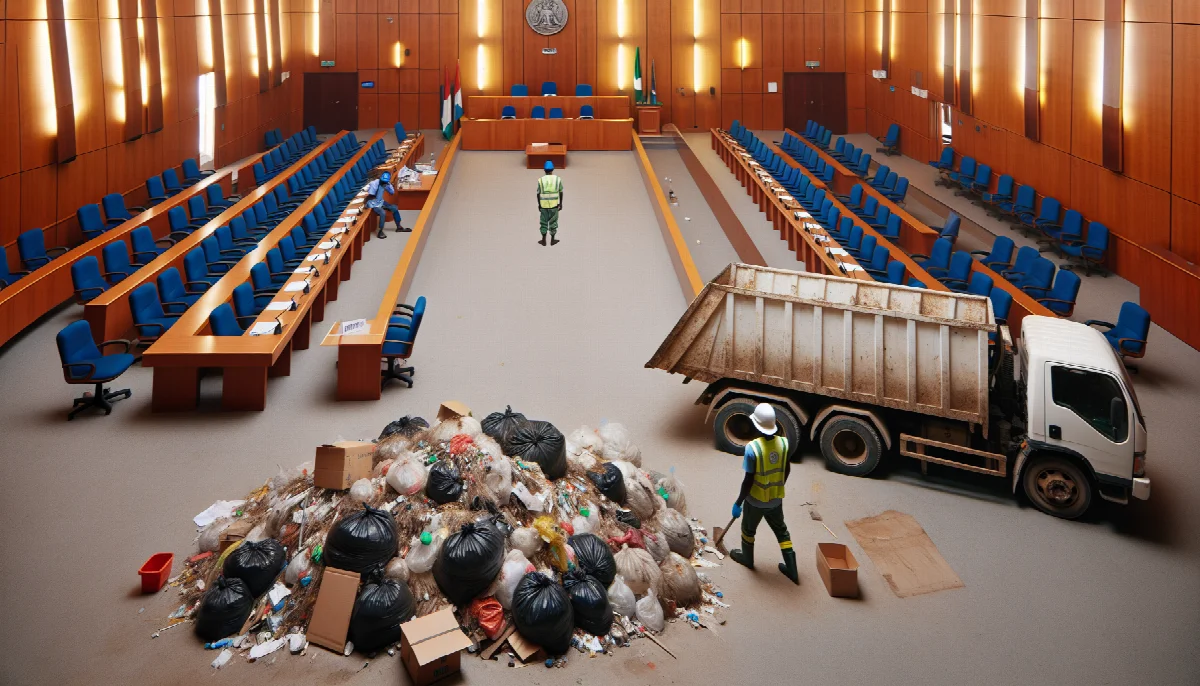
In Lagos State, authorities have postponed the resumption of the monthly environmental sanitation exercise, a long-standing public health initiative that requires residents to stay home on designated days for neighbourhood cleaning. According to statements reported by Vanguard News, a government official acknowledged the delay stemmed from coordination issues among stakeholders.
"The truth is, we were meant to start with a sensitisation programme last week, but we had a logistics issue. We need to find a day that is acceptable to all stakeholders," the official stated, indicating that the programme's restart requires broader consensus-building than initially anticipated.
Lagos State, home to over 20 million residents, has historically implemented monthly environmental sanitation exercises on the last Saturday of each month, during which movement is restricted for several hours to allow for community cleaning activities. The programme has faced criticism in recent years, with some residents and business owners questioning its effectiveness and economic impact, particularly in a megacity where informal commerce operates continuously.
The postponement suggests authorities are seeking to recalibrate the programme's implementation, potentially addressing concerns about enforcement, timing, and stakeholder buy-in. Lagos State's waste management challenges remain acute, with the city generating an estimated 13,000 metric tons of waste daily according to previous government figures.
Implications for Subnational Governance
Both situations reflect broader challenges facing Nigeria's state governments as they navigate complex political and administrative landscapes. In Kano, the NNPP's decision to forgo electoral participation in a state it controls raises questions about party organisation and resource allocation at the subnational level. The move could embolden opposition parties and potentially shift the legislative balance in a politically significant northern state.
In Lagos, the delay in resuming environmental sanitation programmes highlights the difficulty of implementing city-wide initiatives that require coordination among multiple stakeholders, including local government authorities, traditional institutions, market associations, and civil society groups. The need to find "a day that is acceptable to all stakeholders" suggests authorities are attempting a more consultative approach than previous top-down implementations.
These developments occur as Nigerian states grapple with limited fiscal resources, security challenges, and increasing demands for public services. The ability of state governments to effectively manage electoral processes and deliver consistent public programmes remains central to Nigeria's democratic consolidation and development trajectory.
As the Kano by-election proceeds without NNPP participation and Lagos works to restart its sanitation programme, observers will be watching to see whether these setbacks represent temporary administrative hiccups or symptoms of deeper governance challenges at the state level.