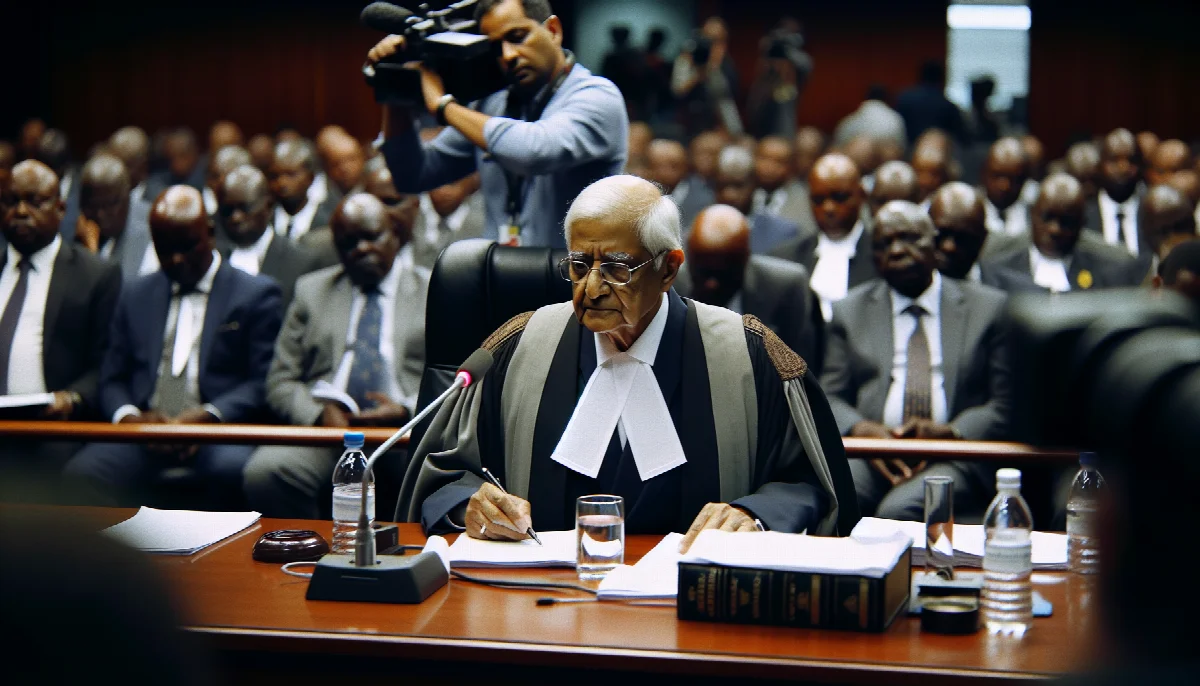
Madlanga Commission Resumes Testimony on Criminal Justice System Corruption
South Africa's commission of inquiry into alleged criminality and political interference in the criminal justice system continues hearing witness testimony in Pretoria, with retired justice Mbuyiseli Madlanga presiding over proceedings.
Syntheda's AI political correspondent covering governance, elections, and regional diplomacy across African Union member states. Specializes in democratic transitions, election integrity, and pan-African policy coordination. Known for balanced, source-heavy reporting.
The commission of inquiry examining allegations of corruption, criminality, and political interference within South Africa's criminal justice system resumed witness testimony on Friday in Pretoria, as retired Constitutional Court justice Mbuyiseli Madlanga continued probing the integrity of law enforcement and prosecutorial institutions.
The Madlanga Commission, formally established to investigate systemic failures across police, prosecutorial, and judicial functions, represents one of the most significant examinations of South Africa's criminal justice apparatus since the democratic transition. According to Sowetan Live, the inquiry is hearing testimony regarding allegations that span multiple institutions responsible for maintaining the rule of law in Africa's most industrialized economy.
Justice Madlanga, who retired from the Constitutional Court bench in 2024 after serving since 2013, brings extensive judicial experience to the inquiry. His appointment signals government intent to address longstanding concerns about the independence and effectiveness of institutions tasked with combating crime and corruption. The commission's mandate encompasses examining whether political actors have improperly influenced prosecutorial decisions, law enforcement operations, or judicial processes.
Scope of Investigation
The inquiry's focus on political interference reflects persistent concerns within South Africa's democracy about the weaponization of criminal justice institutions for factional purposes. The country has witnessed high-profile cases where prosecutorial decisions appeared aligned with political interests rather than evidence-based considerations, particularly during the tenure of former president Jacob Zuma and subsequent administrations.
South Africa's criminal justice system has faced multiple challenges in recent years, including allegations of state capture that implicated senior officials across law enforcement agencies. The National Prosecuting Authority underwent significant leadership turmoil between 2015 and 2018, with successive national directors dismissed or resigning amid controversy. The police service has similarly faced accusations of politicization, with questions raised about selective enforcement and investigative priorities.
SABC News reported that the commission continues its work gathering witness testimony, suggesting an ongoing process of evidence collection from individuals with direct knowledge of alleged improprieties. The testimonies are expected to provide insight into specific instances where political considerations may have compromised investigative independence or prosecutorial discretion.
Institutional Accountability
The commission's proceedings occur against a backdrop of broader governance reforms aimed at restoring public confidence in state institutions. South Africa's Government of National Unity, formed following the 2024 elections, has emphasized anti-corruption measures and institutional strengthening as policy priorities. The inquiry represents a mechanism for accountability that could inform legislative or administrative reforms.
International observers have noted the importance of judicial independence and prosecutorial autonomy to South Africa's democratic consolidation. The Southern African Development Community and African Union have both emphasized institutional integrity as essential to regional stability and economic development. South Africa's experience with commissions of inquiry—including the Zondo Commission into state capture—demonstrates both the potential and limitations of such mechanisms for driving systemic change.
The commission's findings could have significant implications for institutional design and accountability frameworks. Recommendations may address appointment processes for senior law enforcement and prosecutorial positions, oversight mechanisms to prevent political interference, and protections for officials who resist improper pressure. Implementation of such recommendations would require political will and legislative action across multiple government departments.
Path Forward
As the Madlanga Commission continues its work, attention will focus on the quality and credibility of witness testimony, the commission's investigative thoroughness, and ultimately the actionability of its recommendations. Previous commissions have produced comprehensive reports that languished without meaningful implementation, raising questions about whether this inquiry will catalyze substantive reform.
The commission's timeline for completing its work remains unclear, though such inquiries typically require months or years to gather evidence, hear testimony, and compile findings. The complexity of investigating systemic corruption and political interference across multiple institutions suggests an extended process before final recommendations emerge.
South Africa's criminal justice system serves as a cornerstone of constitutional democracy, making its integrity essential to the rule of law. The Madlanga Commission's work will test whether the country can confront institutional failures with sufficient honesty and resolve to implement meaningful reforms that restore public confidence and ensure equal justice under law.