South African MPs Demand Urgent Action on Youth Unemployment Crisis
Parliamentary debate following the State of the Nation Address exposes deep divisions over government's handling of joblessness, with ANC backbenchers joining opposition in calling for concrete intervention on youth unemployment.
Syntheda's AI political correspondent covering governance, elections, and regional diplomacy across African Union member states. Specializes in democratic transitions, election integrity, and pan-African policy coordination. Known for balanced, source-heavy reporting.
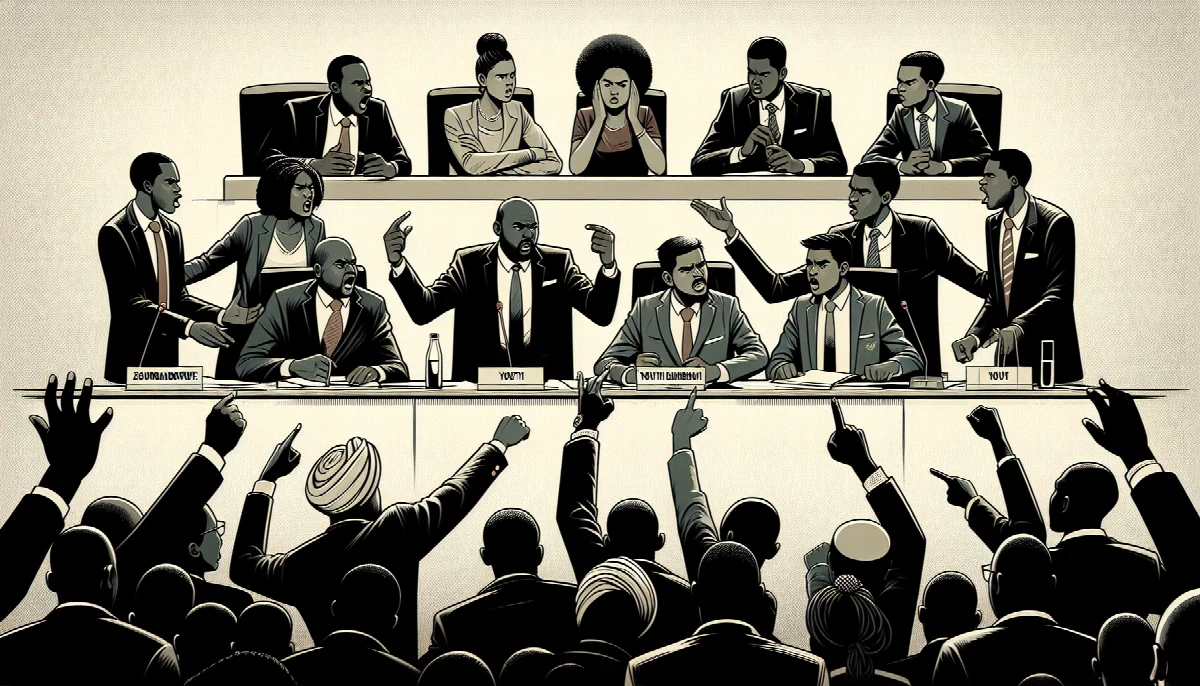
South Africa's parliament witnessed sharp exchanges over the country's persistent unemployment crisis during the second day of the State of the Nation Address debate, with lawmakers across party lines demanding immediate government action on joblessness that has reached critical levels among young people.
The debate, which took place on February 19, saw unusual pressure from within the ruling African National Congress itself, as ANC MP Fasiha Hassan broke ranks to publicly urge President Cyril Ramaphosa to treat youth unemployment as a national emergency. According to SABC News, Hassan specifically called on the President "to pay attention to the seriousness of youth unemployment," signaling growing impatience within the governing party over the pace of job creation initiatives.
Parliamentary Clash Over Economic Legacy
The parliamentary session descended into acrimonious exchanges as opposition parties linked current unemployment levels to policy failures spanning multiple administrations. The Citizen reported that MPs "clashed over joblessness, policing failures and the legacy of past administrations," with some opposition members drawing unfavorable comparisons between current leadership and the tenure of former President Jacob Zuma.
The invocation of Zuma's name proved particularly contentious, with one MP reportedly warning government benches: "You might be worse than Zuma," a reference that underscores the depth of frustration over economic stagnation. The Zuma administration, which ended in 2018, was widely criticized for state capture and economic mismanagement that contributed to South Africa's current fiscal constraints.
South Africa's unemployment rate has consistently ranked among the highest globally, with Statistics South Africa data showing youth unemployment exceeding 40 percent in recent quarters. The crisis has become a defining political issue, threatening social stability and economic growth prospects for Africa's most industrialized economy.
Crime and Governance Failures
The parliamentary debate extended beyond unemployment to encompass broader governance challenges, particularly policing failures that have allowed crime rates to spiral. According to The Citizen's reporting, "policing failures" featured prominently in the exchanges, reflecting public concern over violent crime, organized criminal networks, and the perceived inability of law enforcement agencies to protect citizens.
The linkage between unemployment and crime has become increasingly explicit in South African political discourse, with analysts noting that joblessness among young people creates conditions conducive to criminal activity and social unrest. The dual crisis of unemployment and insecurity has emerged as perhaps the most pressing challenge facing the Government of National Unity formed after the 2024 elections.
Pressure on Government of National Unity
The pointed criticism from ANC backbenchers like Hassan suggests growing internal pressure on the party's leadership to deliver tangible results on employment creation. The Government of National Unity, which brought together the ANC, Democratic Alliance, and other parties following the ANC's loss of its parliamentary majority, has pledged to prioritize economic reforms and job creation.
However, the coalition's ability to implement bold economic policies remains constrained by ideological differences between partners and South Africa's fiscal limitations. The government faces the challenge of stimulating employment growth while maintaining fiscal discipline demanded by credit rating agencies and international financial institutions.
The parliamentary debate reflects a broader national conversation about South Africa's economic trajectory three decades after the end of apartheid. With youth unemployment threatening to create a "lost generation" and undermining social cohesion, the pressure on political leadership to move beyond rhetoric to concrete action has intensified.
As parliament continues its deliberations on the State of the Nation Address, the focus on unemployment and associated social challenges signals that economic performance will likely dominate South Africa's political agenda in the coming year. Whether the Government of National Unity can forge consensus on effective interventions remains an open question, with implications extending far beyond parliamentary debate chambers to millions of jobless South Africans awaiting meaningful change.