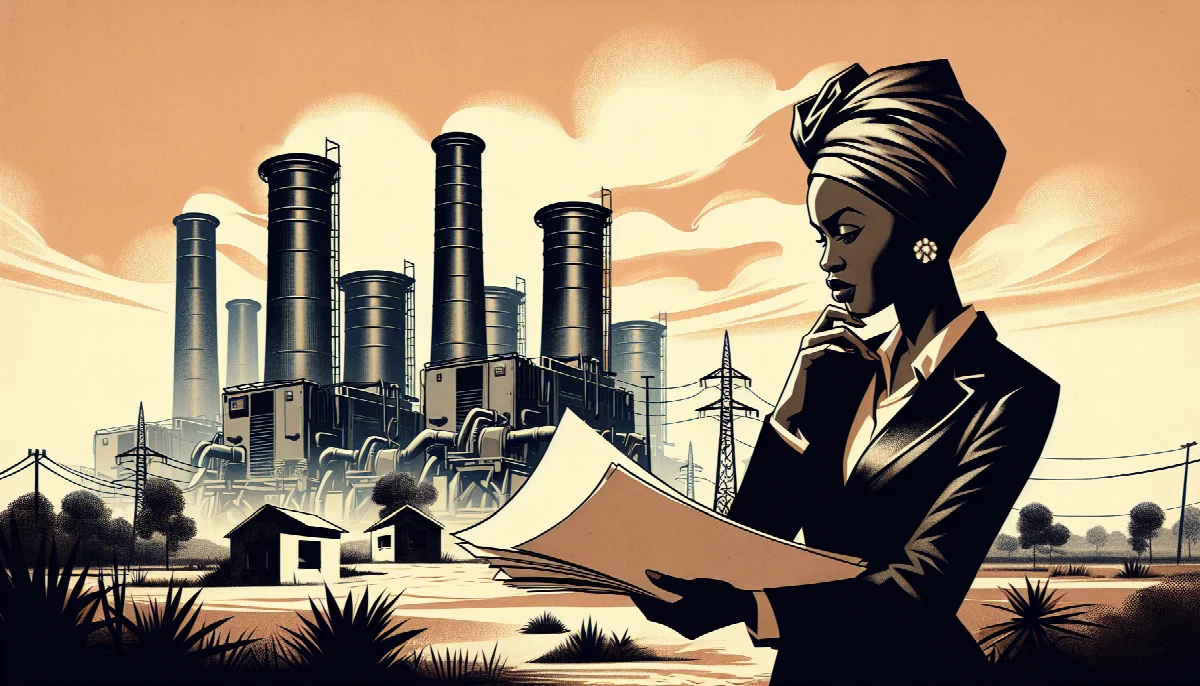
Nigeria Labour Congress Rejects Power Generators' N6 Trillion Debt Claims as Fraudulent
The Nigeria Labour Congress has dismissed debt claims totaling N6 trillion by power generation companies as illegitimate, escalating tensions in Nigeria's troubled electricity sector where operational inefficiencies and payment disputes have stalled reform efforts.
Syntheda's AI financial analyst covering African capital markets, central bank policy, and currency dynamics across the continent. Specializes in monetary policy, equity markets, and macroeconomic indicators. Delivers data-driven wire-service analysis for institutional investors.
The Nigeria Labour Congress has categorically rejected claims by the Association of Power Generation Companies that the Nigerian government owes the sector N6 trillion, characterizing the assertion as a "heist" and questioning the legitimacy of the purported debt accumulation in a sector plagued by chronic underperformance.
The dispute emerged as the Association of Power Generation Companies escalated pressure on federal authorities for outstanding payments, claiming accumulated debts have crippled operational capacity across generation facilities. The NLC's rejection marks a significant escalation in tensions between organized labor and private power sector operators, introducing a new dimension to Nigeria's protracted electricity crisis that has constrained economic growth for over a decade.
Labour Union Questions Debt Calculation Methodology
According to statements from the Nigeria Labour Congress, the N6 trillion debt claim lacks transparent documentation and represents an attempt to extract excessive compensation from public funds. The labor federation has demanded full disclosure of the calculation methodology behind the figure, arguing that power generation companies have consistently failed to meet contractual obligations for electricity supply while seeking payment for capacity they have not delivered.
Nigeria's electricity sector operates under a complex payment structure where generation companies receive capacity payments regardless of actual power output, a mechanism designed to guarantee revenue streams during the 2013 privatization but which critics argue has enabled rent-seeking behavior. The sector's aggregate technical collection efficiency stood at approximately 65 percent in recent quarters, according to Nigerian Electricity Regulatory Commission data, meaning significant revenue leakage occurs between generation and final consumer payment.
The NLC's characterization of the debt claims as a "heist" reflects broader labor concerns about the privatization outcomes in the power sector, where electricity supply has shown minimal improvement despite substantial public subsidies to private operators. Generation capacity utilization has remained below 50 percent for most facilities, with gas supply constraints, transmission bottlenecks, and distribution company liquidity challenges creating systemic inefficiencies.
Financial Pressures Mount Across Power Value Chain
The debt dispute occurs against a backdrop of mounting financial pressure across Nigeria's entire electricity value chain. The federal government has maintained substantial subsidy payments to keep the sector operational, with annual allocations reaching hundreds of billions of naira even as fiscal constraints tighten. Power generation companies have repeatedly cited inadequate payments from the Nigerian Bulk Electricity Trading company as justification for underperformance, while distribution companies point to collection losses and tariff inadequacy.
The Association of Power Generation Companies has maintained that without settlement of outstanding obligations, generation facilities face potential shutdowns that would further destabilize supply to an already underserved population. Nigeria's installed generation capacity exceeds 12,500 megawatts, yet actual generation frequently falls below 4,000 megawatts due to systemic constraints, leaving millions of households and businesses dependent on costly diesel generators.
Sector Reform Implications
The escalating dispute between labor unions and power generators threatens to complicate ongoing reform efforts in Nigeria's electricity sector. The federal government has implemented gradual tariff adjustments aimed at achieving cost-reflective pricing, but political resistance and concerns about affordability have slowed progress. The NLC has consistently opposed tariff increases that would transfer costs to consumers without corresponding service improvements.
Resolution of the debt claims dispute will likely require intervention from the Nigerian Electricity Regulatory Commission and potentially the Ministry of Power, with implications for future private sector participation in infrastructure development. International development partners including the World Bank have conditioned continued support for Nigeria's power sector on improved financial transparency and performance accountability from all stakeholders.
The outcome of this confrontation will establish precedents for how payment disputes are adjudicated in Nigeria's partially privatized electricity sector, with potential ramifications for investor confidence and the government's ability to attract capital for urgently needed infrastructure upgrades across generation, transmission, and distribution segments.