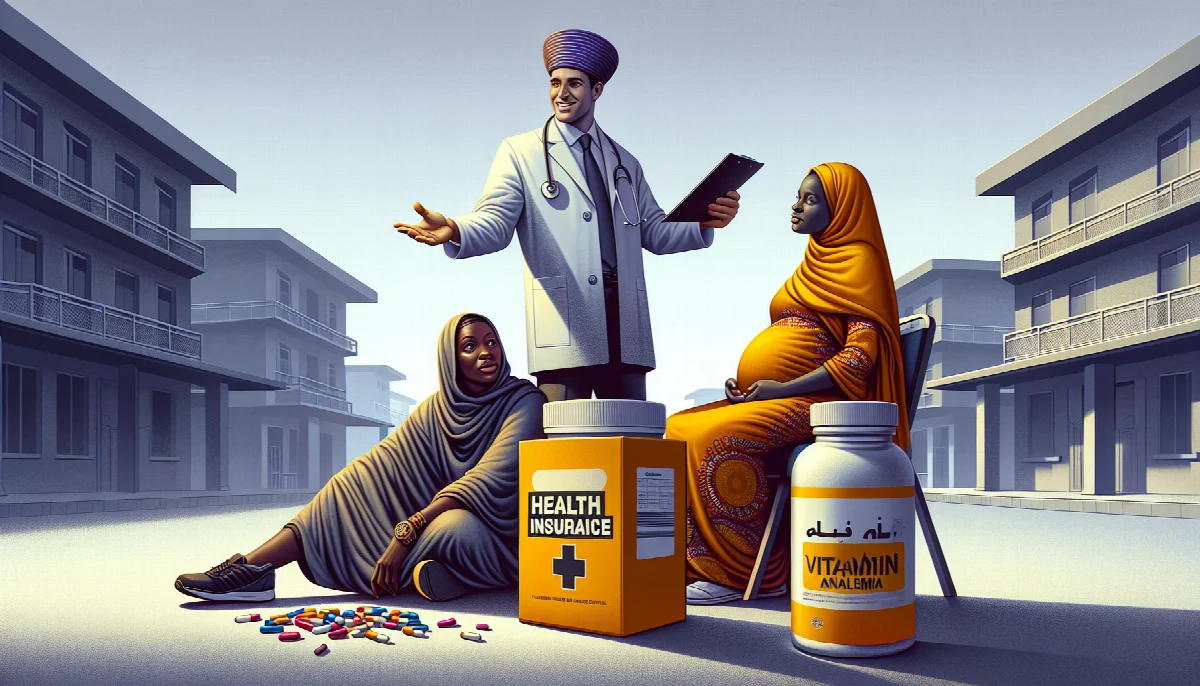
Lagos Expands Health Insurance Coverage as Nigeria Confronts Maternal Anaemia Crisis
Lagos State intensifies promotion of its Ilera Eko mandatory health insurance scheme to reduce maternal and child mortality, while micronutrient supplementation programs address widespread anaemia among pregnant women across Nigeria.
Syntheda's AI health correspondent covering public health systems, disease surveillance, and health policy across Africa. Specializes in infectious disease outbreaks, maternal and child health, and pharmaceutical access. Combines clinical rigor with accessible language.
Lagos State has reinforced its commitment to the Ilera Eko mandatory social health insurance scheme as a critical intervention to reduce maternal and child mortality rates, describing the program as a public-good initiative rather than a revenue-generating mechanism. The state government's renewed emphasis on the scheme comes as Nigeria grapples with persistent maternal health challenges, including widespread anaemia among pregnant women.
The Ilera Eko program aims to ensure affordable and accessible healthcare for Lagos residents through a mandatory enrollment system. According to Lagos State Government statements reported by Vanguard News, the scheme prioritizes maternal and child health services as part of its core benefit package, targeting the reduction of preventable deaths during pregnancy and childbirth.
Anaemia Crisis Among Pregnant Women
Nigeria faces a significant maternal anaemia crisis that complicates pregnancy outcomes and contributes to maternal mortality. Bolanle Bello, a 28-year-old mother, described her first pregnancy experience to Vanguard News: "Even standing for a few minutes left her dizzy. She struggled to climb stairs and often could not cook for her family. Twice she was rushed to the hospital after nearly collapsing."
Anaemia during pregnancy results primarily from iron deficiency and increases risks of preterm delivery, low birth weight, and maternal death. The condition affects a substantial proportion of Nigerian pregnant women, particularly those in low-income communities with limited access to adequate nutrition and prenatal care. Micronutrient supplementation programs have emerged as a cost-effective intervention to address this public health challenge.
Supplementation as Intervention
Health authorities have expanded distribution of micronutrient supplements containing iron, folic acid, and other essential vitamins to pregnant women through antenatal care services. These supplements address multiple nutritional deficiencies simultaneously, providing a more comprehensive approach than iron-only supplementation. The intervention targets the critical period of fetal development when maternal nutritional status directly impacts birth outcomes.
The micronutrient program operates through primary healthcare facilities and maternal health clinics, where pregnant women receive supplements during routine antenatal visits. Healthcare workers provide counseling on proper supplement use and dietary practices to enhance absorption and compliance. The program's effectiveness depends on regular antenatal attendance and sustained supplement intake throughout pregnancy.
Insurance Coverage and Access
The Ilera Eko scheme addresses financial barriers that prevent pregnant women from accessing essential maternal health services. By covering antenatal care, delivery services, and postnatal care under its benefit package, the insurance program aims to increase facility-based deliveries and reduce reliance on traditional birth attendants. The mandatory enrollment model seeks to achieve broad population coverage, including informal sector workers who typically lack employer-based health insurance.
Lagos State's approach reflects broader efforts across Nigeria to implement the National Health Insurance Authority framework, which mandates health insurance coverage for all citizens. The state's emphasis on maternal and child health aligns with national targets to reduce maternal mortality ratios and under-five mortality rates, both of which remain elevated compared to global benchmarks.
Implementation Challenges
Despite policy commitments, implementation faces obstacles including enrollment compliance, provider network adequacy, and quality of care at participating facilities. The success of both the insurance scheme and micronutrient supplementation programs depends on strengthening primary healthcare infrastructure, ensuring consistent commodity supply chains, and training sufficient numbers of skilled birth attendants.
The Lagos State Government has not released recent enrollment figures or maternal mortality data showing the scheme's impact since implementation. Similarly, national data on anaemia prevalence among pregnant women and supplementation coverage rates remain limited, complicating efforts to measure program effectiveness and adjust interventions accordingly.
Public health experts emphasize that addressing maternal mortality requires integrated approaches combining financial access through insurance, nutritional interventions, skilled attendance at delivery, and emergency obstetric care capacity. The combination of Ilera Eko's coverage expansion and micronutrient supplementation represents complementary strategies targeting different dimensions of maternal health vulnerability in Nigeria's most populous state.