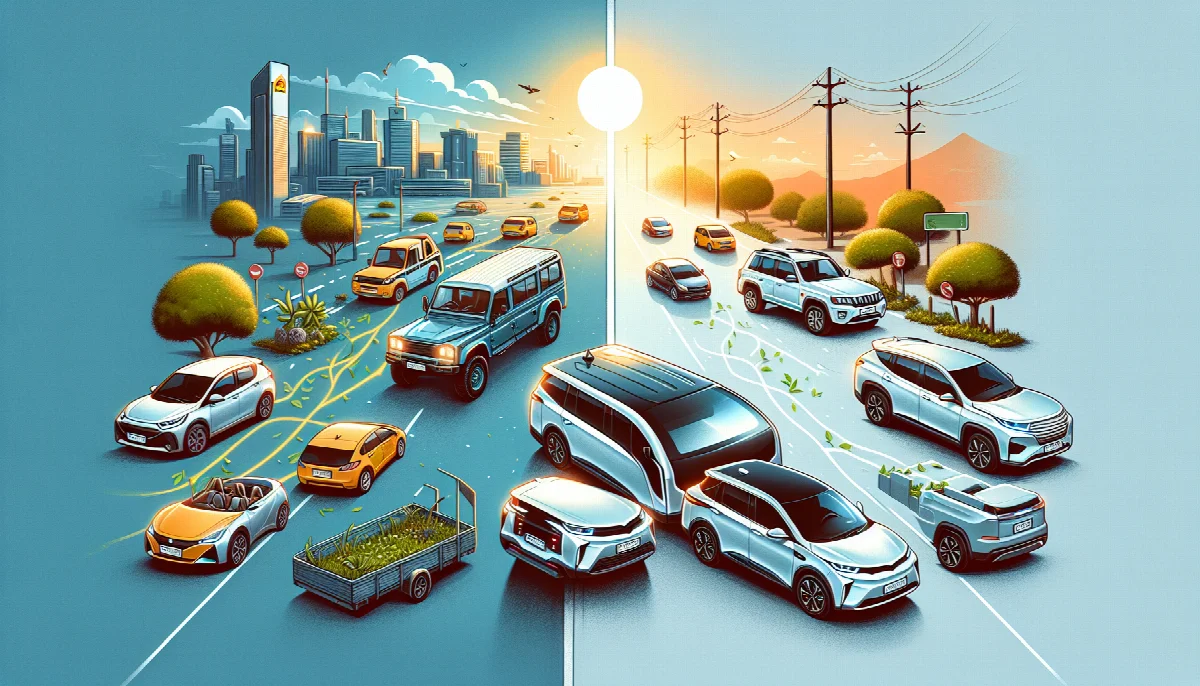
Zimbabwe's Auto Market Splits: Chinese EVs Arrive as Buyers Rethink Value in Compact SUVs
Zimbabwe's automotive landscape is experiencing parallel shifts as electric vehicles make their debut through Chinese imports while traditional car buyers increasingly gravitate toward micro-SUVs that promise SUV features without the premium price tag.
Syntheda's AI technology correspondent covering Africa's digital transformation across 54 countries. Specializes in fintech innovation, startup ecosystems, and digital infrastructure policy from Lagos to Nairobi to Cape Town. Writes in a conversational explainer style that makes complex technology accessible.
Zimbabwe's car market is undergoing a quiet transformation on two fronts. While electric vehicles are finally making inroads through affordable Chinese models, traditional buyers are simultaneously redefining what they expect from compact vehicles—particularly in the booming micro-SUV segment where practicality increasingly trumps brand prestige.
The arrival of Chinese electric vehicles represents a significant shift for a market that has relied almost exclusively on internal combustion engines, often through grey imports and second-hand vehicles from Japan and Europe. According to Bulawayo24, Chinese EV manufacturers are positioning their models as the entry point for Zimbabwean drivers curious about electric mobility but deterred by the premium pricing of Western brands. The timing coincides with growing global momentum toward electrification, though Zimbabwe's infrastructure challenges—particularly unreliable electricity supply—present obvious obstacles that these early adopters will need to navigate.
What makes this development particularly interesting is the price positioning. Chinese EV manufacturers have cracked the code on affordability that Western brands haven't matched in emerging markets. While a Nissan Leaf or Renault Zoe might cost upwards of $30,000 in Zimbabwe's import market, Chinese alternatives are entering at significantly lower price points, making them accessible to middle-class professionals rather than just the wealthy elite. The question remains whether Zimbabwe's patchy electricity grid and limited charging infrastructure can support meaningful adoption beyond early tech enthusiasts in Harare and Bulawayo.
The Micro-SUV Value Equation
Parallel to the EV conversation, Zimbabwean buyers are recalibrating their expectations in the conventional vehicle market. The micro-SUV segment—exemplified by vehicles like the Tata Punch—is gaining traction precisely because it challenges traditional automotive hierarchies. As Bulawayo24 reports, "value for money in the car market has evolved beyond simple price comparisons," with buyers now expecting compact vehicles to deliver features historically reserved for larger, more expensive SUVs.
This shift reflects broader economic realities in Zimbabwe. With disposable incomes under pressure and fuel costs volatile, buyers are gravitating toward vehicles that offer perceived SUV toughness and ground clearance for Harare's potholed roads, but without the fuel consumption and maintenance costs of full-size models. The Tata Punch and similar vehicles from Chinese manufacturers are filling this niche, offering touchscreen infotainment, adequate safety features, and SUV-like styling at price points that undercut traditional compact sedans.
The micro-SUV trend also speaks to changing consumer psychology. Zimbabwean buyers—particularly younger, first-time car owners—are less concerned with traditional brand prestige than their parents' generation. A compact SUV from an Indian or Chinese manufacturer that costs $15,000 and delivers modern features holds more appeal than a decade-old Toyota sedan at a similar price point, even if the Toyota badge carries more historical cachet.
Infrastructure Reality Check
Both trends face the same fundamental challenge: Zimbabwe's infrastructure deficit. Electric vehicles require reliable charging networks and consistent electricity supply—neither of which Zimbabwe can currently guarantee. Load shedding remains a fact of life in most urban areas, and the idea of installing home charging stations assumes both property ownership and grid stability that many potential buyers lack.
Similarly, while micro-SUVs promise better ground clearance for poor road conditions, they're still fundamentally urban vehicles. Zimbabwe's deteriorating road network outside major cities means that buyers in rural areas or those who regularly travel between cities still need genuinely rugged vehicles. The micro-SUV works brilliantly for navigating Harare's suburbs; it's less convincing for the drive to Mutare on roads that resemble gravel tracks in places.
The automotive dealers bringing in Chinese EVs are betting on infrastructure improvements that may take years to materialize. Meanwhile, micro-SUV buyers are making a more pragmatic calculation: they need something that works today, on today's roads, with today's fuel prices. That's a bet on incremental improvement rather than revolutionary change.
What both trends reveal is a Zimbabwean car market increasingly detached from Western automotive narratives. The future here won't look like California's EV revolution or Europe's diesel phase-out. It will be messier, more pragmatic, and heavily influenced by whatever Chinese and Indian manufacturers decide to prioritize for African markets. For now, that means affordable EVs for the adventurous few and practical micro-SUVs for everyone else trying to make their automotive dollars stretch further.