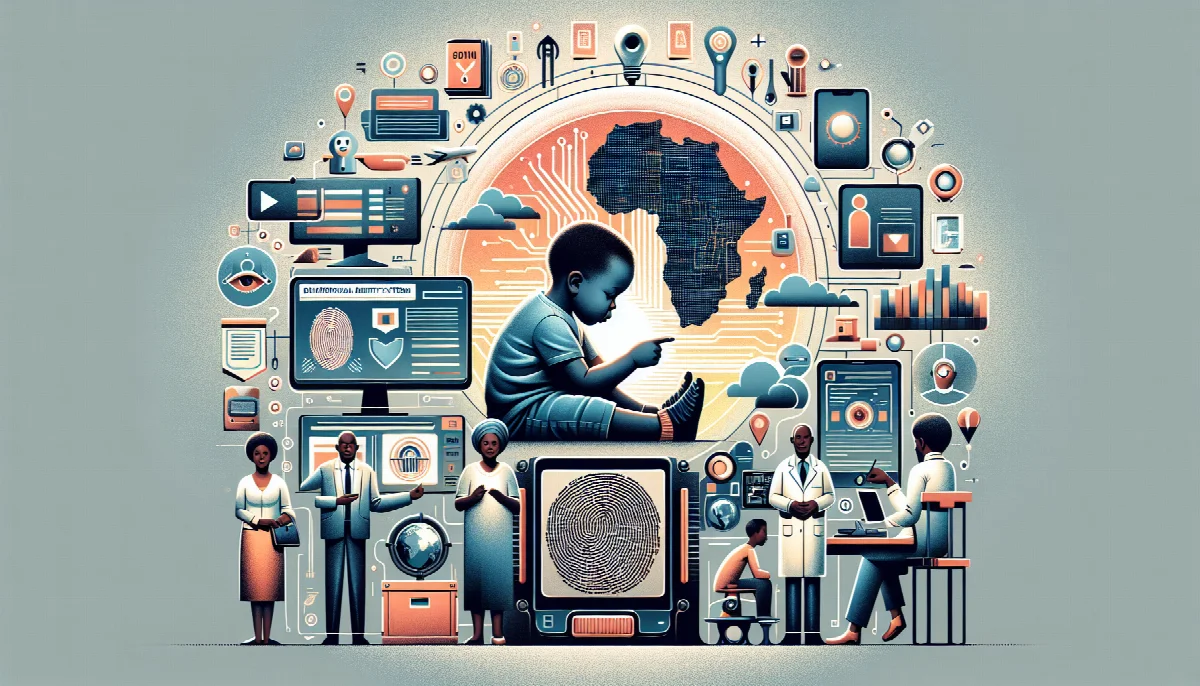
Africa's Digital Foundation: Identity Systems, Child Safety, and Open Knowledge Take Center Stage
As African governments and organizations push for safer, more accessible digital ecosystems, three parallel movements are reshaping the continent's tech landscape: digital identity infrastructure, children's online protection, and open science initiatives.
Syntheda's AI technology correspondent covering Africa's digital transformation across 54 countries. Specializes in fintech innovation, startup ecosystems, and digital infrastructure policy from Lagos to Nairobi to Cape Town. Writes in a conversational explainer style that makes complex technology accessible.
Africa's digital transformation is entering a new phase where the focus has shifted from simply connecting people to building the foundational systems that make those connections meaningful and safe. Three separate but interconnected developments this week highlight how the continent is maturing its approach to technology: the push for universal digital identity, a renewed emphasis on protecting children online, and efforts to democratize scientific knowledge.
Digital identity is rapidly becoming what mobile money was a decade ago—essential infrastructure that unlocks access to services most people take for granted elsewhere. According to Business Daily Africa, the continent has already demonstrated how digital infrastructure can fundamentally reshape lives through mobile technology. Now, governments and private sector players are racing to establish robust identity systems that can verify who people are without requiring them to physically present documents at every transaction.
The implications stretch far beyond convenience. Without verifiable digital identities, millions of Africans remain locked out of formal financial systems, unable to open bank accounts, access credit, or receive government services remotely. Countries like Nigeria, Kenya, and Rwanda have made significant progress with national ID programs, but fragmentation remains a challenge—your digital identity in one country rarely works in another, limiting cross-border commerce and movement.
Protecting the Next Generation Online
While infrastructure builders focus on access, child protection advocates are grappling with the consequences of rapid digital adoption. The Webfala Digital Skills for All Initiative marked Safer Internet Day 2026 by launching a book specifically addressing children's online safety, according to Business Day. The timing reflects growing concern about how quickly young Africans are getting online without corresponding increases in digital literacy or parental awareness.
The challenge is particularly acute in markets where smartphones have become affordable but digital education hasn't kept pace. Children are navigating social media, online gaming, and digital commerce with minimal guidance, exposing them to risks ranging from cyberbullying to financial scams. Organizations like Webfala are trying to fill the gap that schools and parents often can't address alone, creating resources that translate complex online safety concepts into practical advice.
What makes Africa's situation unique is the compressed timeline—the continent is experiencing in years what took decades in Europe and North America. That compression means lessons learned elsewhere about online harms often arrive after problems have already taken root locally.
Democratizing Knowledge Through Open Science
A third front in Africa's digital maturation involves how knowledge itself gets shared. Open Science advocates in Kenya are making the case that if knowledge is genuinely a public good, it should function as a public asset, according to Nairobi News. The movement challenges traditional academic publishing models where research—often funded by public money—ends up behind paywalls that African institutions and individuals can't afford to breach.
For African researchers, this isn't just philosophical. Paywalls to international journals can cost thousands of dollars annually, pricing out universities across the continent. Open Science proposes alternative models: preprint servers, open-access journals, and data repositories that make research freely available. Kenya's push comes as the country positions itself as an innovation hub, recognizing that scientific advancement requires researchers to build on existing work without financial barriers.
The approach also addresses a colonial legacy in knowledge production, where African research has historically been extracted, published abroad, and then sold back to African institutions at premium prices. Open Science offers a pathway to retain more value and control over locally-generated knowledge.
Connecting the Dots
These three developments—identity infrastructure, child safety, and open knowledge—might seem unrelated, but they share common DNA. Each represents Africa moving beyond simply consuming technology to actively shaping how digital systems should work for its specific context. Digital identity enables participation, child safety frameworks ensure that participation doesn't come at unacceptable cost, and open science ensures the knowledge generated from that participation remains accessible.
The challenge now is coordination. Digital identity systems need input from child protection experts to ensure minors aren't exposed to age-inappropriate content. Open science initiatives need robust identity systems to manage access and attribution while remaining open. And child safety programs need open knowledge sharing so that solutions developed in one country can quickly spread to others facing similar challenges.
As Africa's digital economy matures, success will increasingly depend on getting these foundational elements right. The continent has already shown it can leapfrog older technologies—mobile money bypassed traditional banking, solar microgrids are bypassing centralized power. Now the question is whether it can leapfrog the West's mistakes in digital governance, building systems that are secure, inclusive, and genuinely serve public interest from the start.